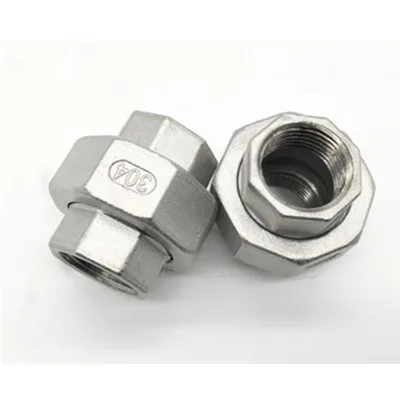
Source 304 Threaded Pipe Union for water, drainage, and industrial systems
Compare 304 Threaded Pipe Union options from verified suppliers offering stainless steel fittings with various thread standards and customization support. This selection includes 30 products suitable for joining pipe lines in water supply and drainage systems.
Key considerations
Products List




Comprehensive Sourcing Guide
Strategic Sourcing Guide for 304 Threaded Pipe Unions
Understanding Technical Specifications and Material Integrity
When sourcing 304 threaded pipe unions, the primary objective is to verify that the product matches the rigorous demands of fluid transport systems. The core material specification for these fittings is consistently identified as 304 stainless steel, with some listings also referencing 316 variants for enhanced corrosion resistance. The material composition is critical because 304 stainless steel offers a balance of formability and durability, making it suitable for a wide range of industrial applications. Buyers must confirm that the material grade is explicitly stated as 304 or 304/316, as the distinction impacts the chemical resistance and longevity of the union in specific environments.
The manufacturing process for these components is predominantly casting, which allows for the creation of complex geometries required for threaded connections. However, the final dimensional accuracy and surface finish often rely on subsequent machining operations. Evidence suggests that these unions are frequently machined by CNC or lathe machines to ensure precise thread engagement. The shape of the union is typically equal, meaning the bore diameter remains consistent across the fitting, facilitating unobstructed flow. The head code is generally round, while the head type may vary, with hexagon configurations appearing in specific product lines to facilitate wrench tightening.
Thread specifications are a critical area of verification. The standard thread types observed include BSP, DIN, NPT, ISO7/1, and ISO228-1. These standards dictate the thread profile, pitch, and taper, which must align with the piping system being installed. The product standard is often cited as ISO4144 and En10241, which governs the dimensional and pressure ratings of the fittings. The pipe size range typically spans from 1/4" to 4", covering a broad spectrum of residential and industrial needs. Additionally, the mounting hole diameter is specified as 0.25 inches in certain models, a detail that is vital for flange or bracket integration. The pipe class is frequently listed as 150, indicating the pressure rating capability of the union.
Compliance and Certification Verification Protocols
In the B2B procurement of industrial fittings, certification serves as the primary indicator of quality assurance and regulatory compliance. For 304 threaded pipe unions, the supply chain often references a robust array of international standards and certifications. Buyers should expect to see references to ASME, ANSI, DIN, JIS, BS, GB, GS, KS, and API standards. These acronyms represent the governing bodies for pressure vessel codes, material specifications, and dimensional tolerances in various global markets. The presence of these certifications suggests that the manufacturer adheres to strict quality control measures during the production cycle.
Furthermore, specific product certifications such as CE and ISO are frequently highlighted. The ISO 9001:2000 standard is mentioned in the context of material alloy steel compliance, indicating a commitment to quality management systems. While some background data references ASTM A182, the explicit product data emphasizes the alignment with ISO4144 and En10241. It is imperative for buyers to verify that the specific batch of products being purchased carries the relevant certificates, as these documents provide the legal and technical backing for the product's safety and performance. The certification status is not merely a marketing claim but a prerequisite for installation in regulated industries such as water supply, drainage, and chemical processing.
The origin of the product is also a factor in compliance. The majority of the observed supply originates from China, with specific production hubs noted in Tianjing. While the geographic origin is not a quality determinant in itself, it influences the logistics and the specific regulatory frameworks applicable to the shipment. Buyers must ensure that the supplier can provide valid documentation proving that the goods meet the destination country's import regulations, particularly regarding material safety and pressure ratings.
Cost Drivers and Economic Factors in Procurement
The pricing structure for 304 threaded pipe unions is influenced by several variables, including material costs, manufacturing complexity, and order volume. The observed price range in the market spans from $0.10 to $30.00 USD. This wide variance is not arbitrary; it reflects differences in size, thread type, and the specific grade of stainless steel used. Smaller fittings, such as those in the 1/4" range, naturally command lower prices compared to larger 4" unions. Additionally, the inclusion of specialized thread types like NPT or specific pressure ratings can elevate the cost.
Minimum Order Quantity (MOQ) is a significant economic factor that impacts the total cost of ownership. The data indicates an MOQ range of 1 to 1000 pieces, with specific product listings showing MOQs of 100 or 300 pieces. Buyers with lower volume requirements may face higher per-unit costs or may need to consolidate orders with other items to meet the supplier's threshold. Conversely, larger orders often benefit from economies of scale, reducing the unit price. The payment terms, described as "assurance" in the supply data, suggest the use of secure transaction methods, which can affect the cash flow dynamics of the procurement process.
Packaging and logistics also contribute to the final cost. The standard packing method involves polybags, cartons, and pallets, which ensures the fittings are protected during transit. However, specialized packaging requirements or expedited shipping can add to the overall expense. Buyers should calculate the total landed cost, including freight, duties, and insurance, rather than focusing solely on the unit price. The warranty period, typically listed as one year, also represents a value component, as it reduces the long-term risk of failure and replacement costs.
Typical Applications and Operational Environments
The 304 Threaded Pipe Union is designed for versatile applications, primarily serving as a connector in piping systems. The stated usage includes joining pipe lines, water supply systems, and drainage networks. The material's inherent properties make it suitable for environments where corrosion resistance is paramount. The product features are explicitly described as corrosion-resistant and chemical-resistant, allowing for deployment in industries handling various fluids without fear of degradation.
The pressure rating of the union, often categorized as high pressure, makes it suitable for demanding industrial applications. The pipe class of 150 indicates a specific pressure rating that must be matched to the system's operating conditions. The connection method is screw thread, which provides a secure and leak-proof seal when properly torqued. This makes the union ideal for systems that require frequent disassembly for maintenance or cleaning, as the threaded connection allows for easy removal and reinstallation.
The specific model numbers, such as BWSF26, BWSF25, and BWSF22, suggest a range of configurations available to meet different system requirements. The application scope extends to water supply and drainage systems, where the reliability of the connection is critical to prevent leaks and ensure system integrity. The "best" quality attribute listed in the data implies a focus on high-performance standards, though buyers should verify this claim through independent testing or certification reviews. The ability to support OEM and ODM customization further expands the application potential, allowing for tailored solutions in specialized industrial settings.
Supplier Evaluation and Customization Capabilities
Selecting the right supplier for 304 threaded pipe unions requires a thorough evaluation of their capabilities beyond the basic product listing. The data indicates that customization is available, with specific mentions of OEM (Original Equipment Manufacturer) and ODM (Original Design Manufacturer) support. This suggests that suppliers can adapt the product to meet specific client requirements, such as unique thread dimensions, specialized surface treatments, or custom branding. The brand name "BKVALVE" is associated with these products, indicating a level of brand identity and market presence.
When evaluating a supplier, buyers should assess their technical expertise in machining and casting processes. The ability to produce fittings using CNC or lathe machines ensures high precision and consistency. The surface treatment process, described as "clean ing," is a basic step, but buyers should inquire about more advanced treatments if the application involves harsh chemical environments. The supplier's capacity to handle the full range of thread types (BSP, DIN, NPT, etc.) is also a critical factor, as it ensures compatibility with various international standards.
The location of the supplier, primarily in China with a specific origin in Tianjing, should be considered in the context of logistics and communication. Proximity to manufacturing hubs can reduce lead times and shipping costs. However, buyers must also consider the time zone difference and the language barrier when establishing communication channels. The supplier's ability to provide clear documentation, including material certificates and test reports, is essential for maintaining transparency and trust.
Quality Control and Long-Term Procurement Considerations
Quality control is the backbone of a successful procurement strategy for industrial fittings. Buyers should implement a rigorous inspection regime that includes visual checks for surface defects, dimensional verification using calibrated tools, and pressure testing to ensure leak-proof performance. The "best" quality claim should be substantiated by third-party test results or adherence to the cited standards like ISO4144 and En10241. The warranty period of one year provides a baseline for quality assurance, but buyers should negotiate extended warranties or performance guarantees for critical applications.
Long-term procurement considerations involve building a sustainable relationship with the supplier. This includes establishing clear communication channels, agreeing on consistent quality standards, and planning for future volume needs. The ability of the supplier to scale production and maintain consistent quality over time is crucial. Buyers should also consider the environmental impact of the manufacturing process and the recyclability of the materials, as sustainability is becoming an increasingly important factor in B2B procurement.
In conclusion, sourcing 304 threaded pipe unions requires a meticulous approach that balances technical specifications, compliance, cost, and supplier reliability. By focusing on the verified data points and adhering to the established standards, buyers can secure high-quality fittings that meet the demands of their specific applications. The key is to maintain a disciplined evaluation process, ensuring that every aspect of the product and the supplier aligns with the project's requirements and long-term goals.
FAQs
What material grades are available for 304 Threaded Pipe Union?
The product is primarily made from 304 stainless steel, with some listings also offering 316 variants. This material selection ensures corrosion resistance and durability for various industrial applications.
Which thread standards are supported for these fittings?
Supported thread types include BSP, DIN, NPT, ISO7/1, and ISO228-1. These standards ensure compatibility with diverse piping systems and international installation requirements.
Can buyers request customization for the pipe union?
Yes, customization is available with OEM and ODM support options. Buyers can request specific modifications to meet unique project requirements while maintaining product integrity.
What certifications do the 304 Threaded Pipe Union products hold?
Products carry certifications such as CE, ISO, ASME, ANSI, DIN, JIS, BS, GB, GS, KS, and API. These documents verify compliance with international quality and safety standards.
How is the manufacturing process conducted for these unions?
The manufacturing involves casting followed by CNC or lathe machine machining. This combination ensures precise dimensions and high-quality surface finishes for reliable performance.
What is the minimum order quantity for purchasing these fittings?
The minimum order quantity ranges from 1 to 1000 pieces, with specific listings showing MOQs of 100 or 300 pieces. Volume discounts may apply for larger orders.
Where are these pipe fittings manufactured and shipped from?
The products originate from China, with specific production hubs noted in Tianjing. This location influences logistics planning and shipping timelines for international buyers.
What warranty is provided for the 304 Threaded Pipe Union?
A standard warranty of one year is provided for the product. This coverage helps mitigate risks associated with manufacturing defects or premature failure in normal usage.